

In love with the ocean. Committed to life.
Surfing and strength training in Peniche, with an initial assessment included and individualised coaching in a group.
By Inês Tralha
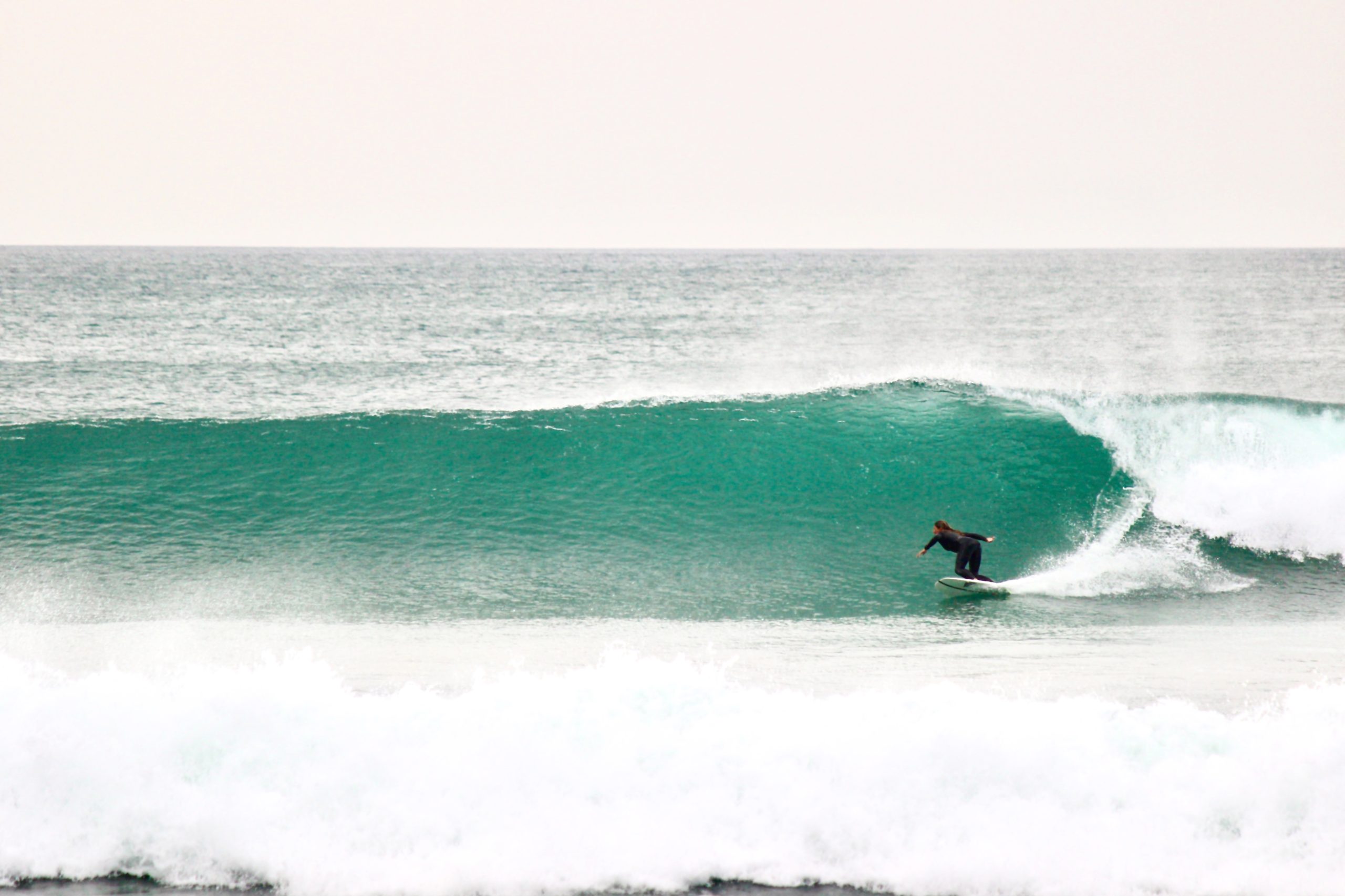
The clocks will soon change for winter, visitors are returning to their own little corners of the world, and we are gradually getting our hometown back. The great waves, warmth and sunny afternoons were still going strong when September asked us to get organised. I completely understand why that conversation was left for later.
So now is the time. Let’s prepare for the demands of winter surfing and start building towards next spring and summer. Ready to show what we can do, with better fitness, more strength and a closer connection to the body. Mind included, please! 🧠😆 And to the ocean.
Make room for a lasting relationship.
Ongoing coaching in Peniche, led by Inês Tralha through the METSIT® method. Surfing and strength training with individualised coaching within one integrated plan.
Each week: one surf session and two physical training sessions.
Includes: an initial assessment, planning and periodisation, at least two video recordings, and a monthly group video review and gathering.
First four members: €195/month, keeping that rate.
Standard monthly fee: €240. Minimum commitment of six months. Availability of the introductory offer is confirmed at registration.
The first two members also receive a Garmin watch on temporary loan for six months.
I want to joinAsk Inês a question
These buttons open a WhatsApp conversation with me to discuss joining or ask questions.
I want this relationship to have time to grow. Room to learn, train, understand what has changed and meet again. With a plan that makes sense for the person who turns up, the life they bring with them and the ocean we find.
When someone gives me a few hours of their day, they are investing far more than the time spent in a lesson. They have organised their life, made the journey, prepared their equipment and found room among everything else that already fills their days. Then they have paid to learn, train or enjoy the ocean more.
Time, money and trust. I feel an enormous responsibility for all three.
That is why I find it difficult to think of training as a series of meetings where we arrive, do something and go home without really understanding what we have built. The body that turns up next week is the same one. What we have learnt comes with us too. The work needs a memory.
This is the value of ongoing coaching: understanding your starting point, setting priorities and returning to them with enough information to decide what comes next.
We start by getting to know you. Your initial assessment is included.
Before choosing exercises or asking for more effort, I need to understand the person in front of me.
We begin with a structured conversation about your health and sporting history, any injuries or limitations, your routine, your experience in the ocean and what you are looking for. The time you have available to train and recover matters too. A plan that ignores your life has little chance of becoming part of it.
This is followed by a physical and functional assessment, with tasks and measurements selected in response to that information. Mobility, strength, endurance, balance and motor control can help us understand your starting point. In the surf, we also observe your relationship with the board, your reading of the ocean, positioning, paddling and decisions in the conditions you are practising in.
Weight and height can be useful information, particularly when choosing equipment. They need to be considered alongside what you can do, your experience and your goals. The scales alone know very little about your surfing.
This assessment guides training. If your history or an observation indicates that a clinical assessment is needed, that must be respected before proceeding with the relevant tasks.
Your sporting history matters. So does the present.
Your sporting history helps me understand the movement repertoire you have built: the movements you have explored, how regularly, in which settings and with what demands.
That experience may provide resources for learning. How you use them in surfing needs to be observed. Having played a sport twenty years ago and having the physical capacity for particular tasks today are different pieces of information. Both matter.
I want to know where you come from so that we can choose a starting point from which to build. With challenge, fun and adrenaline, and with risk managed as carefully as possible.
We train as a group. Each person has their own path.
Surfing and strength training take place in a group, with individualised coaching. The initial assessment helps define each person’s priorities; observation and session records help us adjust the work over time.
In surfing, individualisation means selecting tasks, equipment, levels of difficulty and feedback suited to what each surfer needs to learn. In the same session, one person might be working on positioning to catch a wave while another works on their line after standing up, within conditions appropriate for the group.
In strength training, we adjust exercises and variations, loads, repetitions, training volume and rest periods to each person’s current capacity and goals. Two people can perform the same exercise with different demands. Progression follows each individual’s response.
The group brings company, shared experiences and a regular commitment to training. The coaching keeps its focus on the person in front of me: their body, their learning and where they are in their journey.
One surf session and two physical training sessions need to connect
The pack combines one surf session and two physical training sessions per week, in Peniche. The value of that combination depends on how we organise it.
If we observe a difficulty in the ocean, we need to understand what might explain it. It could involve physical capacity, coordination, equipment, reading the wave or a combination of these factors. The next decision grows out of that analysis.
Out of the water, we can work on capacities that need attention and create conditions to practise particular movements with greater control. In the water, we observe how those resources are being used. Transfer to surfing needs to show up in practice.
Strength training also matters for life beyond the ocean. Regular physical activity can benefit physical and mental health, sleep and functional capacity. The World Health Organization includes muscle strengthening in its recommendations for adults. These are benefits associated with appropriate, continued activity, depending on the individual, the work done and their response. There is more to them than a before-and-after photograph.
We will plan and periodise. And the plan will go on the wall.
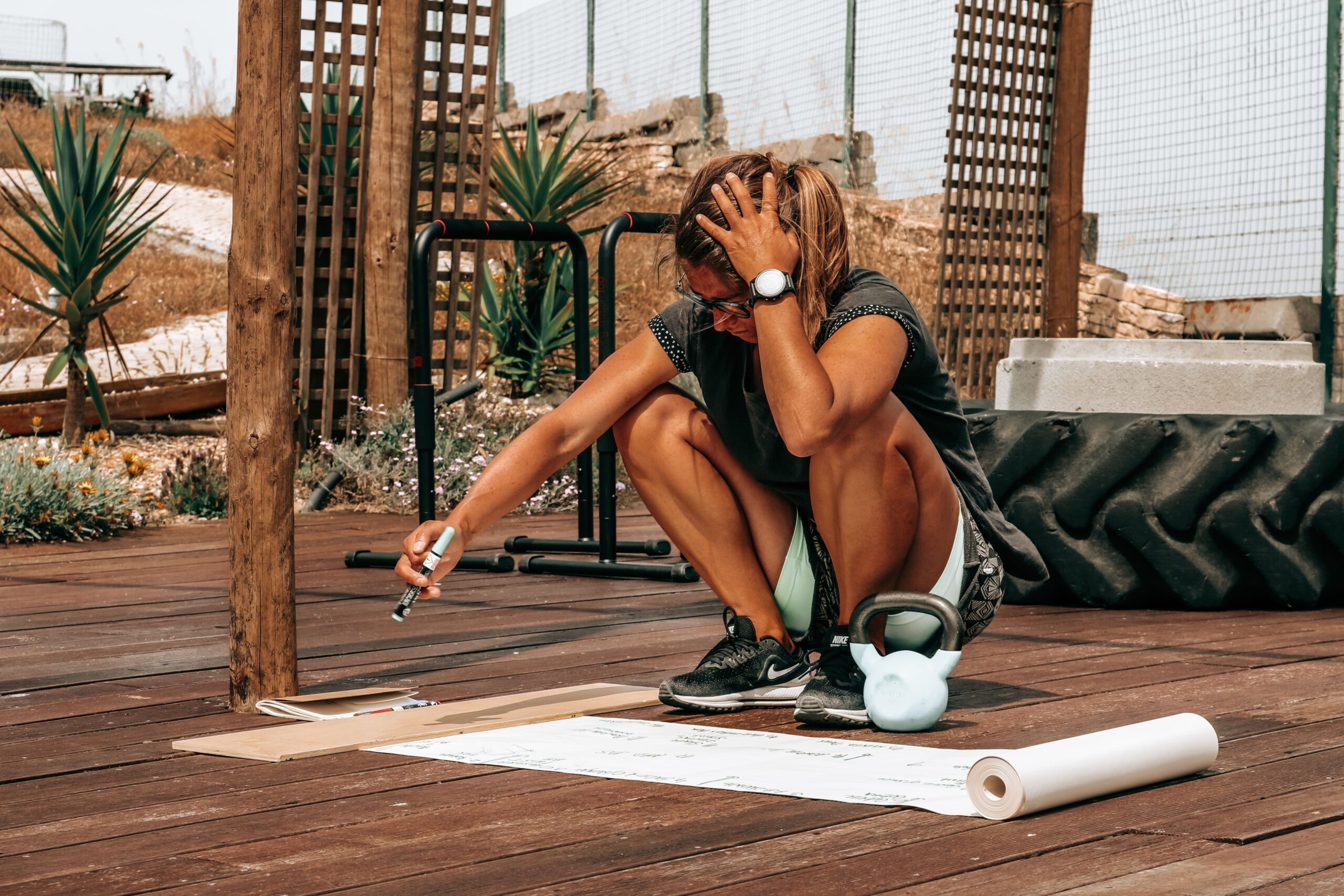
Planning means deciding what we want to build, with which priorities and how to organise the work. Periodisation means distributing that work over time, coordinating demands, learning and recovery.
In our training space, that organisation will be visible. We will put a map of the work on the wall: the phases, general goals, assessment points and video review meetings.
I want you to be able to look at it and understand where we are, what we are working towards in this phase and how it connects with the next. Your individual programme will include the adjustments you need. Personal information, including health data, stays in your private record.
The map must allow adjustments. A particularly demanding week at work, a poor night's sleep, an unexpected response to exercise or a change in the ocean may alter a decision. Periodisation gives us direction and criteria for reviewing it.
We do not need to wait for a competition to organise a season. Preparing for winter, building resources for spring and maintaining your practice throughout the year are goals that deserve planning.
Ongoing coaching lets us adjust along the way
Continuity gives us opportunities to observe patterns that a single session might miss. How do you respond to effort? What are you consolidating? Which task still requires help? How do you arrive at training after a busy week?
We can review a priority, adjust the demands, change an explanation or return to a task before increasing the difficulty. We can recognise progress you had not noticed and difficulties that need another approach.
That relationship also makes room for questions. I want you to understand what you are doing and take part in decisions about your progress. Independence grows through knowledge and opportunities to apply it.
We will track progress with useful records
We will have a starting point and opportunities to reassess. We will choose measures that help guide the work: a mobility measure relevant to you, for example, the load used in an exercise with consistent execution, how regularly you can train and how you are recovering.
In surfing, video will let us return to a specific priority and observe what has changed. That interpretation needs to consider the board, ocean conditions and task difficulty. Doing something on one wave and attempting it on another are not automatically comparable experiences.
Charts will help us read the journey. Each one will have a question behind it: are we building capacity? Does the work fit into your week? Do we need to adjust recovery? A rising line might mean more strength, more effort or more fatigue, depending on what we measure.
A single value needs context. A small difference can come from measurement itself. And a chart alone cannot predict injuries or explain everything happening in a body.
One method connecting the ocean and training on land
One surf session and two physical training sessions can fill a diary. To build a coherent journey, they need to connect. This is where METSIT®, the method I developed, brings assessment, learning, planning and periodisation together around the person in front of me.
In this programme, I coach both your surfing and your strength training. The same methods, values and principles guide both settings. What I observe in the ocean can inform the work on land; your response to physical training helps me adjust the sessions that follow. This continuity supports clear communication and reduces the need for you to reconcile instructions from people who do not oversee the whole process.
My academic training in Physical Education and Sport, complemented by specialisation in surfing, gives me tools to connect motor control, learning, physical capacities and training organisation. Group sessions remain individualised: priorities, tasks, equipment, exercises, loads and progressions are adapted to each person.
Six months to build a journey
The programme requires a minimum commitment of six months. This gives us time to organise the work, support learning and physical preparation, reassess and adjust periodisation as you progress.
The first two members will also receive a Garmin watch on temporary loan for those six months. The watch must be returned at the end of the loan. We will use the records available on the supplied model to follow trends and learn to interpret them alongside observations from sessions and how you feel.
A watch on your wrist. Information with a purpose.
I want monitoring to help you understand your training. Activity duration, heart rate where available and perceived exertion records can help us compare sessions and discuss your response to the work. The data becomes meaningful when considered alongside sleep, recovery, life outside training and the context of each session.
The calories displayed by a watch are an estimate of energy expenditure. They can offer a reference for the demands of different days and remind us that training also requires energy for recovery. They are not an exact measurement or an instruction to eat less or replace every session with a precise calorie allowance. Garmin explains how these estimates are calculated.
Eating to support what we ask of the body
Food belongs in this conversation too. Where useful, a food diary can help us observe meal timing, regularity, hydration and the distribution of macronutrients: carbohydrates, proteins and fats. Understanding the record can help reveal patterns, such as repeatedly arriving at training after many hours without food or failing to plan a meal after a demanding session.
Carbohydrates provide energy for exercise; protein supports tissue repair and adaptation; fats also supply energy and contribute to essential bodily functions. The aim is to understand food in relation to training and recovery, without reducing a meal to arithmetic. The Australian Institute of Sport describes food records as a tool for connecting habits, energy, recovery and training demands.
A watch does not measure what you have eaten or automatically detect your macronutrients. That information requires food logging. Garmin Connect+ nutrition features require their own subscription and compatibility, neither of which is included in this offer. We can explore eating habits without relying on that feature. An individual dietary prescription belongs with a dietitian and is not included in this programme.
I want you to better understand the relationships between what you do, what you eat and how you recover. Technology helps us ask better questions. Coaching gives the answers context.
The monthly gathering is part of the training too
The pack includes at least two video recordings of your surfing and a monthly group observation and video review, with time to socialise.
Watching the footage with guidance helps connect what you felt with what we can observe. Identifying a priority, answering a question and leaving with a useful cue for the next session gives video a specific purpose.
The gathering also creates space to share the process with others. There is room to learn, recognise achievements and enjoy the company of people who have also chosen to make the ocean part of their lives. Each person keeps their own path and decides what they wish to share.
More than a summer romance
If September went by in good waves, warm weather and sunny afternoons, we can get organised now. Prepare for winter's more demanding ocean and begin building towards next spring and summer: with greater physical resources, more knowledge and a stronger connection with the body. Mind included, please! 🧠😆 And with the ocean.
The Surf + Physical Training pack includes an initial assessment, one surf session and two physical training sessions per week, at least two video recordings and one monthly group observation and video review. Physical training takes place in Peniche.
€195/month, exclusively for the first four members.
The standard monthly fee is €240. The first four members join at €195/month, with physical training included at no extra cost, and keep that rate.
This introductory offer is limited to the first four members. After those four places are taken, new members pay €240/month. Offer availability is confirmed at registration.
Send me WINTER and tell me about your current practice and which days you can train. We will explore your starting point and the group that makes sense for you.
I want the hours you give me to have direction, substance and continuity. Nobody has time for poor programmes.
I want to joinAsk Inês a question
Inês Tralha
Good Surf Good Love · Baleal, Peniche